
Kamnik deserves a day of its own
A Bavarian dynasty, castles above the rooftops and a chair that reached MoMA. Stay in Kamnik long enough to discover the town behind the mountain views.

Start with the town
Stand below Mali grad and look along the roofs towards Šutna. Kamnik is small enough to explore on foot, yet its story stretches from medieval trade to furniture recognised around the world. The mountains are a handsome backdrop. The streets beneath them deserve your attention too.
It is easy to pass through on the way to Velika planina and leave without seeing the museum, the monastery library or the old shopfronts. Give Kamnik a full day instead. Start in the historic centre, leave time for Zaprice and lunch, then choose an afternoon visit or a walk up to Stari grad. A second day gives the surrounding countryside its own space.
A Bavarian family and a town with its own coins
The Counts of Andechs connected Kamnik with Bavaria and the wider political world of the medieval Alps. Their estates and influence reached well beyond today's borders. Under their rule, Kamnik became one of the important urban centres of Carniola. The historical German name Stein is another trace of that shared Central European past.
This was a place of trade and power, with its own mint. The Kamnik museum's historical collection records the mint as early as 1195. Coins make that distant story tangible: a small piece of metal carried the authority of a ruler into an ordinary transaction. At Zaprice, the medieval material helps connect the names of noble families with the town you have just walked through.
Mali grad, Stari grad and Zaprice
Kamnik's three castles offer different encounters with the past. Mali grad rises directly above the centre. Its Romanesque chapel and surviving walls are a close companion to the streets below, and the terrace opens a view across the town. This is the castle most visitors can weave naturally into a walk through the centre.
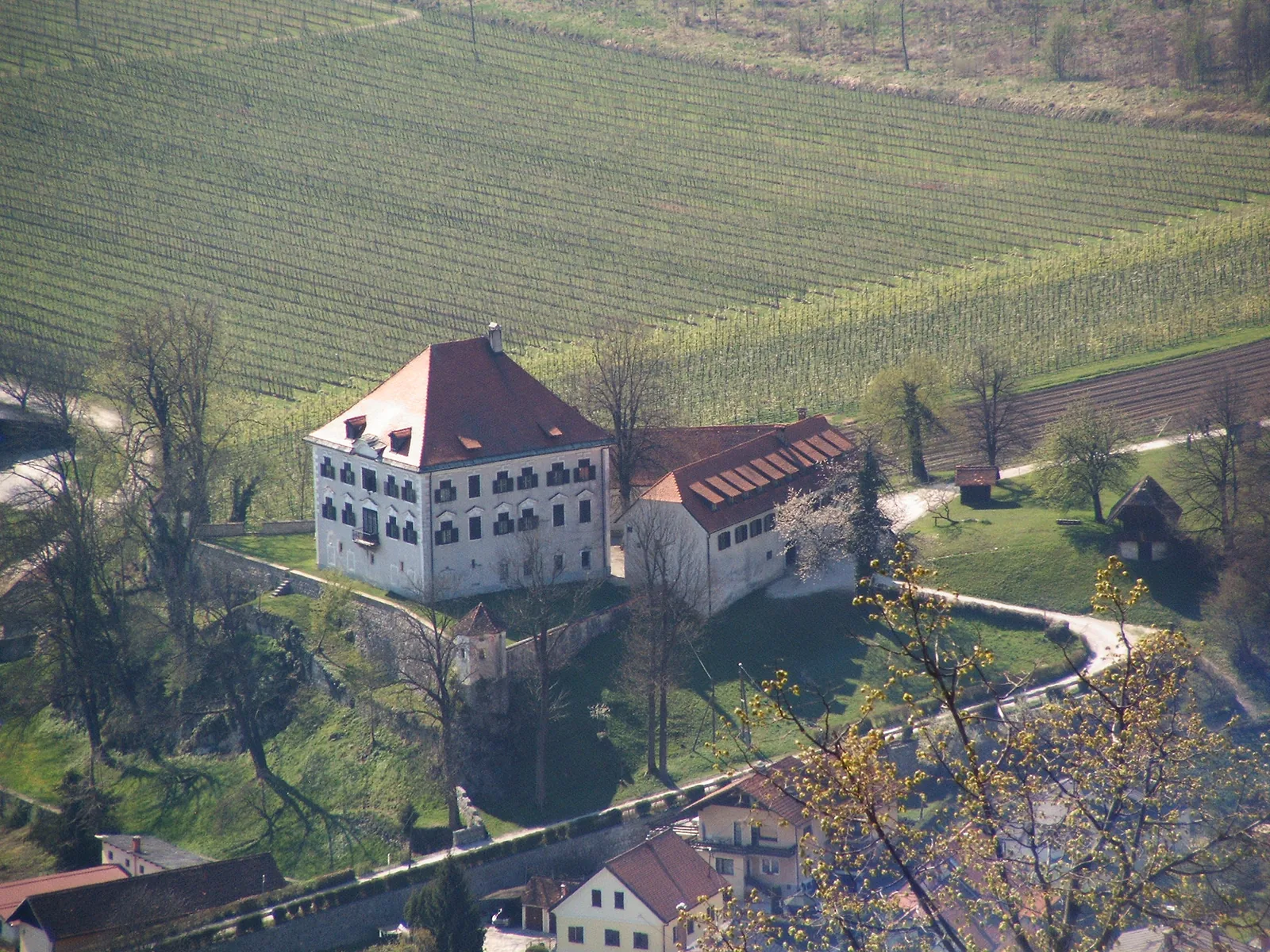
Stari grad stands higher on the hill across the river. Its ruins reward a longer uphill walk with a broad view of Kamnik and the surrounding mountains. Allow time for the climb and choose footwear and a route that suit the conditions. Zaprice is different again: a later manor with museum rooms, reached by a short ascent from the old town. Together they reveal changes in defence, residence and the way heritage is used today.

Veronika still belongs to Kamnik
The figure on Kamnik's coat of arms is half woman, half snake. Local legend identifies her as Veronika, a wealthy countess who refused to help three brothers raising money for a church. In the story, her own angry words bring about her transformation; the earth opens and she disappears beneath Mali grad, where she guards her treasure.
The legend gives the familiar hill a second, imagined landscape below ground. Looking for Veronika on the town's emblem is a good way to bring the story into a walk, especially with children, without confusing folklore with medieval history.

At Zaprice, follow the curve of a wooden chair
The Intermunicipal Museum Kamnik at Zaprice places the town in a longer regional story. Leave enough time to look closely rather than treating it as a brief castle stop. Its historical and industrial collections help explain why Kamnik mattered before it became a destination for day trips.
The Thonet furniture collection is a particularly rewarding link with the wider Central European world. Bentwood changed how furniture could be made, repeated and transported. The familiar curve of a chair becomes evidence of an industrial idea. The museum traces bentwood production in Duplica from 1907 into the late twentieth century. For visitors from Austria or Germany, these objects offer a recognisable starting point for discovering a less familiar Slovenian manufacturing history. Check the museum's current exhibitions and opening arrangements before your visit.
From the Stol factory to New York
Duplica's furniture story continues with the Stol factory and designer Niko Kralj. His REX chair joins a practical folding structure to carefully shaped wood. It belongs to the world of everyday use, where a chair must be comfortable and easy to move, while its construction invites a closer look.
The Museum of Modern Art in New York includes Kralj's REX Lounge Chairs, dated 1956, in its collection. It does place a design associated with Kamnik alongside objects studied far beyond Slovenia. For an international visitor, this is a compelling reason to look beyond the picturesque streets: a town of this size helped shape a product with a global design reputation.
A town made by its factories as well as its castles
Kamnik's industrial heritage reaches well beyond furniture. The former gunpowder works, remembered as the smodnišnica or Barutana, belong to a history of specialised production that also shaped the town's working life. The museum's industrial collection provides a useful introduction; the former factory grounds should not be assumed to be freely accessible.
Other names open different cupboards of memory. Svilanit made textiles and household linen, Titan is associated with locks and metal products, and Eta with food processing. Utok recalls leather production; Svit, ceramics. These were workplaces as well as brands. Following their products helps explain how people earned a living and how Kamnik was connected to households across a much wider area. The town's heritage is also in those ordinary objects.
Slow down on Šutna
Šutna rewards a slower pace. Facades, doorways and changing rooflines let you read the old town at the scale of a person walking through it. The Church of Mary's Immaculate Conception and its separate bell tower give the street a distinctive silhouette. Pause at the smaller details instead of moving straight from one major monument to another.
The Sadnikar collection adds a more personal kind of history. Veterinarian and collector Josip Nikolaj Sadnikar opened his private collection to the public in 1893. Part of his legacy entered the Kamnik museum, while a family collection remains on Šutna. A visit to the private collection needs advance arrangement, so ask about current possibilities before planning your day around it. It is a reminder that museums often begin with one person's patient attention to things others might overlook.

Books and Plečnik at the Franciscan monastery
By the Church of St James, the Franciscan monastery offers another rhythm. Its library preserves an important historical book collection, including a copy of Jurij Dalmatin's Bible. The friars' more systematic collecting began after 1627. These books connect the town with learning, religious life and the history of the Slovene written language.
Jože Plečnik's Holy Sepulchre adds a twentieth-century architectural encounter within the church. It is worth seeing alongside, rather than only through the fame of, his better-known Ljubljana work. The monastery remains a living religious place. Arrange access to the library in advance and respect worship and any visitor guidance; not every space is open for an unannounced walk-in visit.
When clothing heritage fills the streets
The Days of National Costumes and Clothing Heritage, Dnevi narodnih noš in oblačilne dediščine, have roots in the town's 1966 celebration. The festival brings clothing, craft and folklore into public space, with a procession that makes the streets part of the event.
Look beyond the colour of the costumes. Materials, headwear and the way garments are worn tell stories of regional identity and of how people choose to present their heritage today. The festival is a particular reason to return to Kamnik. Check the organiser's programme for the next edition rather than assuming that a previous year's dates will apply.
Leave room for Okusi Kamnika
Lunch belongs in the day, not in the gap between sights. Okusi Kamnika brings local food traditions into the town's hospitality. Look for dishes such as firštov golaž, a goulash associated with the area, or tuhinjska fila, a baked stuffing from the Tuhinj Valley. Kloštrska kremšnita offers a sweet finish; the decorated hard cheese trnič connects the table with the pastoral world of Velika planina.
What is served depends on the restaurant and season. Ask what is available that day and allow time to enjoy it. A meal can connect the museum's domestic objects and the region's food production with something immediately present on your plate. It is also a good reason not to squeeze Kamnik into the last hour of a mountain excursion.
Make a day for Kamnik
A comfortable day can begin with Šutna and Mali grad, continue to the museum at Zaprice, and pause for a local lunch. Choose the monastery, an arranged collection visit or the climb to Stari grad for the afternoon according to your interests, opening arrangements and walking pace. Trying to enter every interior in one day is less rewarding than giving a few places enough time.
For help connecting these stories, explore Vitamia's guided Kamnik tour below. See the published programme and choose the available visits and options that suit your day.
Sources and visitor information
- Medobčinski muzej Kamnik: A Bavarian family and a town with its own coins
- Medobčinski muzej Kamnik: A Bavarian family and a town with its own coins
- Visit Kamnik: Veronika still belongs to Kamnik
- Medobčinski muzej Kamnik: At Zaprice, follow the curve of a wooden chair
- MoMA: From the Stol factory to New York
- Medobčinski muzej Kamnik: A town made by its factories as well as its castles
- Medobčinski muzej Kamnik: Slow down on Šutna
- Frančiškanski samostan Kamnik: Books and Plečnik at the Franciscan monastery
- Visit Kamnik: When clothing heritage fills the streets
- Slovenia.info: Leave room for Okusi Kamnika